Scaleway says it will build an AI supercomputer in Sweden using AMD Instinct MI355X accelerators, its first such system outside France. The French cloud provider announced the project on 13 October. Reuters reporter Leo Marchandon reports that Scaleway describes it as Europe’s first AMD-based AI supercomputer for commercial use; that distinction belongs to the company’s announcement, rather than an independently established market ranking. Scaleway’s release confirms the planned hardware and location.
The project adds another supplier option for European organisations seeking AI compute. AMD’s MI355X is intended for demanding AI workloads, while the software stack, ROCm, offers an alternative to Nvidia’s CUDA ecosystem. As Marchandon reports, existing AI software often depends on Nvidia’s tools. Although ROCm supports widely used frameworks, changing hardware can still require testing and adaptation. A customer’s choice may depend on software compatibility, availability, cost and measured performance for its workload—not just which processor sits in a rack.
Location and independence
Scaleway says Sweden’s electricity mix and existing AI sector informed the location choice. The Swedish site also extends the company’s infrastructure footprint beyond its established French base. But a European operator and a European location do not, by themselves, establish that a service is independent of global suppliers. Chips, networking, storage and software still come from a wider international supply chain.
Reuters reports that the project will be assembled and maintained by Bull, with servers from Giga Computing, networking from HPE, storage from VAST Data and cooling equipment from Motul. That partner list gives the announced system a more concrete industrial shape. It does not show when it will be ready or what capacity customers will be able to buy.
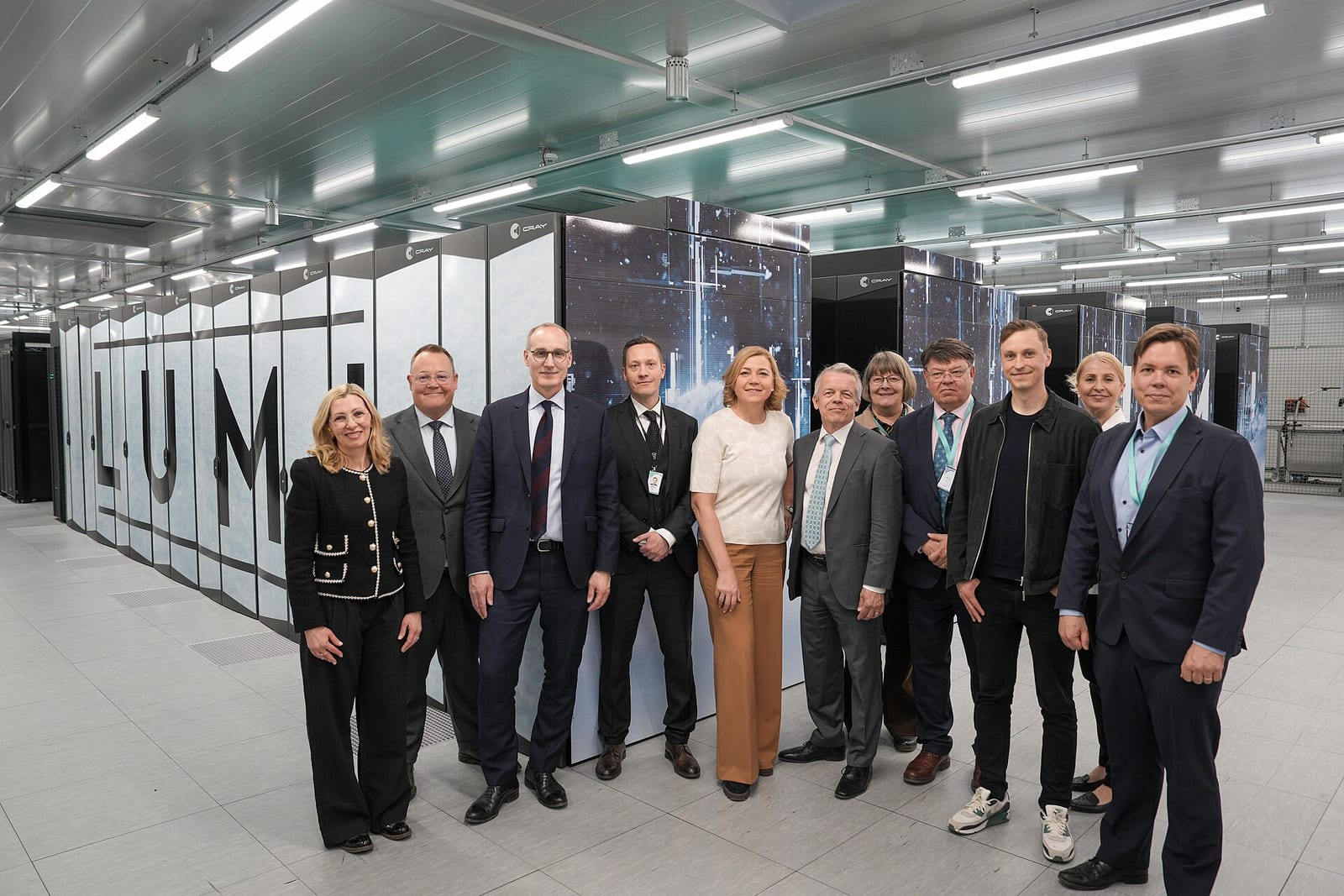
Scaleway’s announcement calls the planned machine its first commercial supercomputer based on AMD technology in Europe. The wording is significant because AMD accelerators already operate in European research supercomputers, including Finland’s LUMI, and US cloud companies already rent AMD capacity to European customers, as Reuters notes. Scaleway’s claim concerns commercial supercomputing infrastructure, not the first AMD AI hardware in Europe.
From announcement to service
The reviewed announcements do not state a launch date, price, GPU count or customer access terms. That leaves open the practical questions for buyers: how much compute will be available, which software will run smoothly, how performance compares on real workloads, and whether the service arrives on schedule.
For Europe’s AI infrastructure market, a second accelerator ecosystem could improve resilience and bargaining power if customers can use it without excessive migration costs. The Swedish project is a step toward that option, not proof that the option is ready. Installation, commissioning and customer access will determine whether the announced choice becomes a usable one.