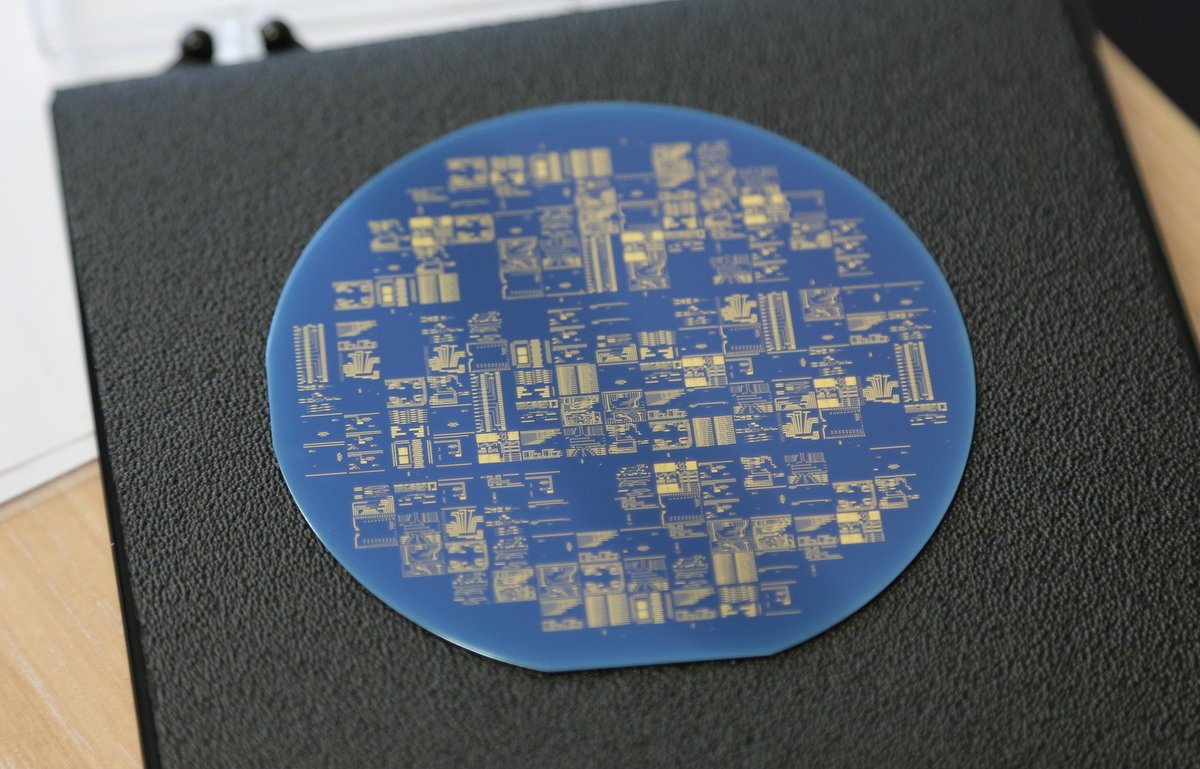

On 29 October, the European Commission’s Digital EU account posted on X that the EU is working to boost Europe’s semiconductor industry, listing stronger manufacturing, more research, fewer strategic dependencies and better conditions for investment. It pointed readers to the Chips Act 2.0. The proposal itself is not new: the Commission published it on 3 June 2026, and the European Parliament and the member states are now each working out their position on it.
If you have seen the name and wondered what it actually does, this explainer is for you.
First, why does the EU care so much about chips?
Chips, or semiconductors, power the technologies the Commission expects to shape European competitiveness: AI applications, cloud infrastructure, drones, connected vehicles and industrial robots. It calls them key enablers of Europe’s ambition to become an AI continent.
The EU is strong in some areas, such as power electronics, sensors and manufacturing equipment, but it makes a small share of the chips themselves. The proposal states that the EU produces less than 10% of the world’s semiconductors and is almost entirely dependent on the US and Asia for the most advanced chips, those below 5 nanometres, including AI chips. Europe is also a small buyer. According to World Semiconductor Trade Statistics (WSTS), the industry’s statistics body, chip sales worldwide came to $795.6 billion in 2025. Asia-Pacific accounted for $439.7 billion and the Americas for $256.5 billion. Europe’s $54.7 billion was about 7% of the total, just ahead of Japan’s $44.7 billion. These are sales figures: they show where chips are bought, which is not the same as where they are made.
The market is growing fast, and forecasts struggle to keep up. The Commission expects it to reach €1.37 trillion by 2030, with AI-related components driving around 70% of that growth. In June, WSTS forecast that sales would reach $1.51 trillion as early as 2026, mainly because of a surge in memory chips. It expects Europe’s market to grow by 58% this year, against 90% worldwide. On those forecasts, Europe’s share of global chip sales would fall from about 7% to under 6%.
What did the first Chips Act do?
The original Chips Act entered into force on 21 September 2023. It rested on three pillars: funding for research and pilot production, rules to attract new factories, and a system to monitor supply and respond to shortages. The Commission said it would help the EU meet its Digital Decade target of doubling its global market share in semiconductors to 20%.
According to the Commission, the act helped mobilise more than €52 billion in public and private investment and created an estimated 46,000 direct and indirect jobs. Among the projects is the ESMC factory in Dresden, a joint venture led by TSMC with Bosch, Infineon and NXP, for which the Commission approved €5 billion in German State aid in 2024, as Brian Tristam Williams writes in eeNews Europe.

The 20% goal is another story. In 2025, the European Court of Auditors said reaching it was very unlikely. It measured the EU’s share of the global chip value chain, meaning all the steps from design and materials to making and packaging chips, at 9.9% in 2019 and 9.8% in 2022, and forecast 11.7% for 2030. The auditors also noted that only about €4.5 billion of the €86 billion expected for 2021 to 2027 is managed directly by the EU; the rest is expected to come from other public money, leveraged equity and private investors. Another setback came in July 2025, when Intel said it would no longer go ahead with its planned projects in Germany and Poland.
What is new in Chips Act 2.0?
It would be a new law, not an amendment. The proposal would repeal the 2023 regulation and replace it, keeping the three-pillar structure but changing what sits inside it.
The biggest shift is towards demand: linking chipmakers to the European companies and public bodies that buy chips, not only supporting factories. A senior Commission official, speaking anonymously to Pat Brans of EE Times, put it this way: “With the Chips Act 2.0 we want to be much more demand driven.”
Linking buyers. The Commission proposes Demand Accelerators to bring new chips to market faster, more innovation procurement aimed at European start-ups and scale-ups, and links with the Cloud and AI Development Act, with the aim of turning demand from data centres, cloud providers and AI Gigafactories into demand for European chips. Public buyers of essential services and critical infrastructure could also weigh security of supply alongside price.
Building factories. Permit decisions for qualifying projects would come within a maximum of 12 months. The proposal says permitting and design phases for advanced chip factories in the EU take on average 7.5 months longer than in competing regions. State aid, meaning government subsidies that the Commission must approve, would be available for “first-of-a-kind” projects, those not yet present in the EU, across the whole value chain, from raw materials to packaging, the step that puts a finished chip in its protective case. New “strategic projects” could receive EU funding alongside member states and industry, and regions that attract chip investment could earn a Semiconductor Regions of Excellence label. A priority project aims at the EU’s first facility combining leading-edge manufacturing with chiplet integration and advanced 3D packaging, with pilot production envisaged for 2030 to 2033.
Crisis tools. A Business-to-Business Semiconductor Supply Chain Platform would let companies share aggregated, non-sensitive data so that shortages show up earlier. The proposal estimates that setting it up and running it would need about €70 million in operational spending. In a declared chip crisis, which would last up to 12 months with possible extensions, the Commission could request information from companies, require priority orders and act as a central buyer for member states. The proposal also scraps the European Chips Infrastructure Consortium, a legal form from the first act that was never used.
So where is the money?
There is no new headline figure for the act as a whole. Funding for the main programmes and strategic projects after 2027 depends on the next long-term budget, for 2028 to 2034, which is still being negotiated. EE Times reports that some strategic projects could need several tens of billions of euros, and that the start-up money in the first act’s Chips Fund that ran through the EIC Accelerator was used up within two years. According to EE Times, the EU does not plan to take direct stakes in chip companies, unlike the US with Intel.
What do industry and economists say?
The European Semiconductor Industry Association welcomed the focus on industrialisation and demand. Its president, Erik Rein of Bosch, warned that projects in Europe still cost more and take longer than elsewhere, citing permits, energy costs and complex State aid rules. His summary: “Industrial policy only works if it moves at industrial speed.” ESIA also wants first-of-a-kind support to reach beyond factories to the wider ecosystem, including the companies that use chips.
Some buyers want more than forums. Edith Euan Diaz of the AI chip company Axelera AI told EE Times that Europe needs preferential public procurement of European AI chips and volume commitments from large customers, and that companies needing €30 million to €500 million to move into production often cannot raise it in Europe.
Christian Rusche of Ruhr University Bochum, writing in Intereconomics, calls the proposal a meaningful step forward from the first act, but writes that it is “unlikely to close the competitiveness gap on its own.” He points to national support schemes that remain poorly coordinated and to Europe’s lack of strong lead markets.
What happens next?
In the European Parliament, the industry committee (ITRE) leads, with Oliver Schenk (EPP) as rapporteur. Member states have discussed the text in a Council working party since June. Under the Irish Council Presidency, a first text with amendments to the first two pillars is dated 29 September, and a first compromise text on the crisis pillar followed in October, according to Agence Europe.
The institutions aim to agree by the second quarter of 2027, a target Silicon Saxony notes is not legally binding. Until then the text can change. The aims in Digital EU’s post match those on the Commission’s own page for the proposal. How much new EU money stands behind them depends largely on the separate negotiations on the EU’s 2028 to 2034 budget.